Many online travel tools make it easier to research destinations, compare options, and build your own trips. Some of these tools even let people book reservations, so they don’t have to visit different websites.
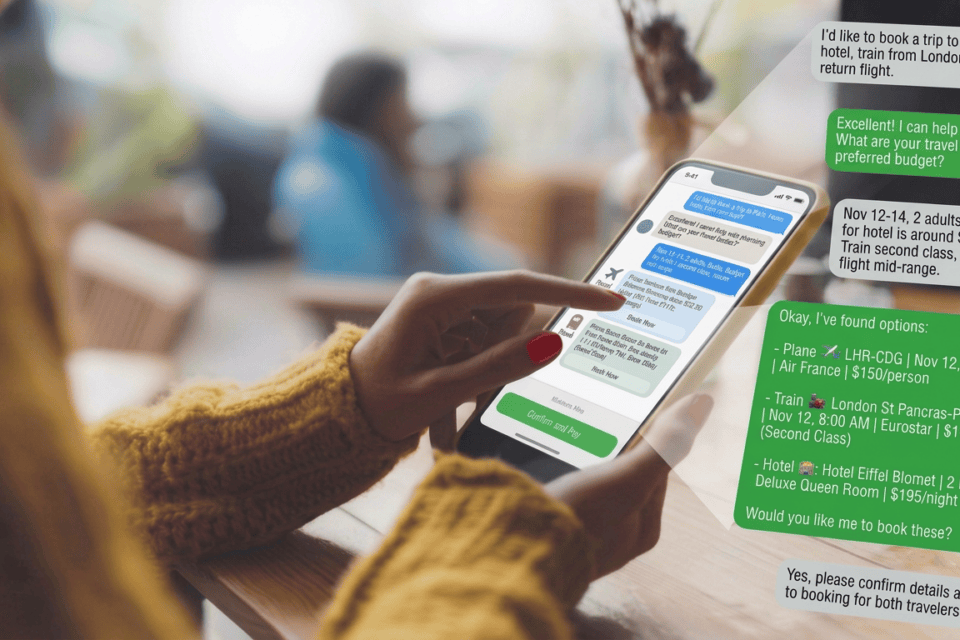
There is an app called Instinct. I used Instinct by messaging back and forth in an app thread, and it did all the annoying travel stuff for me after I linked my accounts. It is good for everything, but it made the most difference in travel.
I was hesitant to add a payment method at first, but after three weeks of using it, I would not have left my house without it. I still had to fix some issues, like blocked payment pages.
What Instinct Can Help With
There is a difference between getting travel ideas and having a service help you plan your travel. With Instinct, I could look at what was available, make a reservation, and complete a booking; I only had to send a message.
The term ‘agent’ means it can actually do things, not just generate suggestions.
The difference is quite significant. Some tasks require the assistant to access your accounts and payment details. You are going from asking the assistant for advice to having the assistant take care of things for you.
How My Wife and I Used Instinct
Soon after we added a payment method and connected a few accounts, we saw the potential.
I also added my wife’s Instinct account to mine. This let us book each other’s train, hotel, and flight tickets, ask each other questions, share itineraries, and schedule reminders and downloads.
These are the little things that make traveling more than just finding a flight and a hotel. You need to book things and share information. You don’t want to forget anything.
I started using it once I figured out how. The best thing about it was not the answers, but having a backup for all the little things that can be annoying when planning something.
What Worked, and What Didn’t
It is amazing when everything goes well. However, sometimes you might face a website that won’t allow outside help or a payment page that won’t load. In those cases, you’ll have to do some research.
I ran into a couple of problems, for instance, when I was blocked on some payment pages. I had to pay attention to the total amount that I was being asked to pay.
So before you hand over a task, don’t forget that Instinct only goes as far as other websites allow. It’s not magic; it has its limits.
The difference between finding an option and finishing a booking is important. This research is useful when a transaction is blocked, but it is not the same as completing the transaction.
Getting Comfortable With Payments
My hesitation to add a payment method came from wanting to feel more comfortable with what this assistant can do. While it’s okay to ask the assistant for travel suggestions, it’s different when an assistant makes purchases for you.
First, make sure you have read and understand the terms and conditions, privacy policy, and permissions you are agreeing to or giving up. Be clear about what the service can access, what you are agreeing to, and when you want to approve a purchase or change it yourself.
A capped or single-use virtual card may be worth considering. Privacy.com offers virtual cards with spending limits and single-use options, which can help you control how much you spend.
The important question is: what are you comfortable letting the assistant do, how much money is it allowed to spend, and what decisions do you want to make yourself?
Lessons for Travel Businesses
My experience with Instinct is only the story of one person – it is not some test that a big company ran. The successes and failures are a good indicator of what travel companies need to do to use these tools successfully with their actual customers.
Start small, and see what works.
Pick a task, for example, same-day disruption rebooking, and decide what you would consider to be a successful outcome for the task before measuring how much of the task was automated.
Keep a record of whether the task was completed correctly, how long it took, how much it cost to serve the customer, and whether any corrections were required after completion. An attempted booking is not a completed booking.
Make It Easy for Someone to Step In
Blocked payment pages are only one problem. Others include complicated fare rules, schedule changes, and overbooked rooms.
Provide a clear path to a human when an assistant gets stuck. The person who takes over the conversation should be able to see what happened and what the assistant did, so they don’t have to start from scratch.
Get the details and connections right.
An assistant should have accurate details of reservations, fares, availability, loyalty, and customer records. It should also have reliable access to the systems it is using.
Tips Implementation
Choosing the right product is not enough to turn a helpful personal assistant into a reliable business service. You will need to test the assistant’s functionality, understand what it can do, and train your staff on when to ask for help.
Test It. Carefully. Before Expanding Access
For Instinct or any AI assistant, read the privacy terms, data retention and deletion policies, and any other security information. Make sure you understand how the assistant or service will handle account access, identity verification, and one-time passcodes.
Start with synthetic data, then try limited tasks and permissions before a full-scale rollout. You can use virtual cards and spending limits to implement this.
Another option is to have the assistant make suggestions and have users try them out. Users can then compare the results before taking action themselves.
Provide information gradually, then suggest, and finally take supervised action. Allow for more freedom of action only in areas where the output is of a certain quality.
Keep Everything in Check
If you can, allow the assistant only to perform approved actions such as search, pricing, ticketing, or refunds. You can then add checks before processing a transaction.
Limit spending and ask the user for confirmation for important actions. Make it clear when the assistant should stop and ask for help, rather than doing something without the user’s input.
Would I use Instinct again?
Yes, I wouldn’t leave Instinct at home for more than 3 weeks.
The most important feature for me is managing travel with my wife. I wanted to book things, share itineraries and meetings, ask questions, and set reminders.
The downside was that it couldn’t always do the job. Some sites and payment pages were blocked, so Instinct was more of a research tool when blocked. So…I still had to monitor costs.
This also applies to travel companies. While a helpful suggestion is great, it is more important to complete the task with the right permissions and be able to fix things if something goes wrong.
It works well when it does, and I am happy to use it, but I would like to keep an eye on what it is doing.