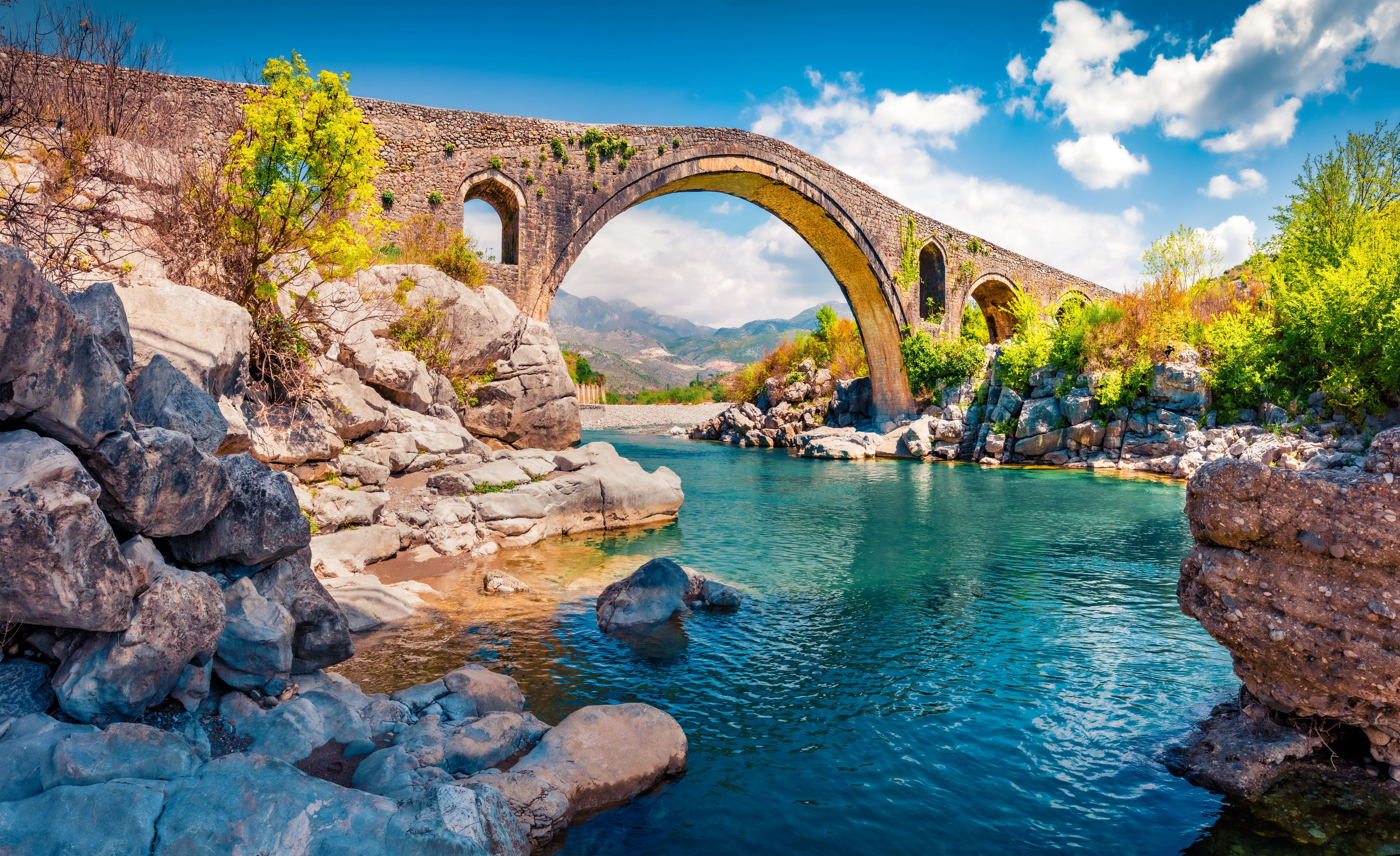
Albania is rapidly gaining recognition as one of Europe’s fastest‑growing travel destinations. UN Tourism’s January 2025 World Tourism Barometer (excerpt) reports Albania among the best performers, with 2024 international arrivals roughly 80% above 2019 levels. An accompanying UN Tourism investment guide for Albania underscores the sector’s momentum. National statistics also confirm the surge: in calendar year 2023, 10,155,640 foreign citizens entered Albania, up 34.6% year‑on‑year (INSTAT, December 2023 release).
Increased Tourist Interest
Once largely overlooked by travelers, Albania has captured the attention of many in recent years. Beyond the overall growth, INSTAT notes that neighboring markets remain central to inbound demand: in 2022, arrivals from Kosovo, North Macedonia, and Montenegro accounted for 58.9% of all foreign entries (INSTAT, Tourism in Figures 2022, p. 15 infographic; see also Albania in Figures 2022).
Natural Beauty and Adventure
What contributes to Albania’s allure? The country offers a striking mix of beaches along the Adriatic and Ionian Seas and rugged mountains ideal for hikers. The coastline features clear-water coves on the Albanian Riviera, while the Albanian Alps (including the Theth–Valbonë area) provide classic multi‑day trekking.
Rich History and Cultural Depth
Beyond its landscapes, Albania is steeped in history, with UNESCO World Heritage sites such as Butrint and the Historic Centres of Berat and Gjirokastra. Archaeology, Ottoman‑era urban fabric, and living traditions make these destinations rewarding for culturally minded travelers.
Essential Travel Tips
As tourism flourishes, visitors can combine the dynamic capital of Tirana with time on the Riviera around Sarandë/Ksamil and days in the Albanian Alps for hiking. Friendly hospitality and generally good value continue to be part of Albania’s appeal.
Best times to visit
For most travelers, shoulder seasons balance weather and crowds best:
- Coast (Riviera): May–June and September–October offer warm weather and swimmable seas without peak‑season pressure (see Lonely Planet’s guidance on the best time to visit Albania; and the Southern Coastal Trail When to Visit guidance in AKT’s official PDF). AKT Southern Coastal Trail — When to Visit (PDF)
- Albanian Alps (Theth–Valbonë): Trails are most reliably open July–September; late June and early October can work depending on conditions (see Lonely Planet; seasonality profiles in the World Bank Climate Change Knowledge Portal (Albania) highlight midsummer as the driest window at higher elevations).
Conclusion
With Albania’s growing popularity now backed by strong, recent data, planning around seasons and regions will help you make the most of the country’s beaches, mountains, and UNESCO‑listed heritage.
Sources
- UN Tourism (UNWTO), World Tourism Barometer — January 2025 (excerpt) — published January 2025.
- INSTAT (Albania), Movements of Citizens — December 2023 (annual 2023 totals) — published January 25, 2024.
- INSTAT (Albania), Tourism in Figures 2022 — publication page; see p. 15 infographic for Kosovo (42.9%), North Macedonia (9.2%), and Montenegro (6.8%) shares of foreign entries in 2022. See also Albania in Figures 2022 — Movement of Citizens.
- UNESCO World Heritage Centre: Butrint (Albania) — accessed September 28, 2026.
- UNESCO World Heritage Centre: Historic Centres of Berat and Gjirokastra — accessed September 28, 2026.
- Euronews Travel, “Hidden gem to holiday hotspot: How Albania became one of Europe’s fastest‑growing travel destinations” — published September 22, 2026.
- Lonely Planet, “The best time to visit Albania” — accessed September 28, 2026.
- World Bank Climate Change Knowledge Portal — Albania country climate profile — accessed September 28, 2026.
- Albania National Tourism Agency (AKT), Southern Coastal Trail — When to Visit (PDF) — published 2022.
- UN Tourism & Ministry of Tourism and Environment of Albania, “Tourism Doing Business: Investing in Albania” (investment guideline, PDF) — published 2024.