Last verified: August 13, 2026 at approximately 7:30 p.m. BST / 8:30 p.m. in Sicily.
This is a developing travel situation. Airport restrictions, flight schedules and volcanic ash conditions can change quickly. Travelers should confirm their individual flight directly with their airline before leaving for the airport.
Travelers flying to or from Sicily should prepare for continued disruption as volcanic activity at Mount Etna affects aviation across eastern Sicily and creates knock-on problems elsewhere on the island.
The most serious disruption remains at Catania-Fontanarossa Airport (CTA). According to Reuters, citing airport operator SAC, all arrivals at Catania are suspended through 8:00 a.m. local time on Friday, August 14 because of ash from Mount Etna.
SAC had previously announced a departure suspension through 2:00 a.m. Friday. Reuters reported Thursday that no updated departure timetable had been provided with the latest arrival extension, so passengers should verify their individual flight directly with their airline. Travelers should therefore check their individual flight rather than assuming the arrival and departure restrictions have the same timetable.
Official Catania Airport updates: Catania International Airport
Current Travel Impact at a Glance
- Catania (CTA): Major disruption. Arrivals suspended through 8:00 a.m. Friday, August 14. Travelers should verify departures directly with their airline.
- Palermo (PMO): Operating, but experiencing knock-on pressure. The airport has absorbed diverted Catania traffic.
- Comiso (CIY): Operating. The airport previously experienced a temporary ash-related suspension but had returned to full operations by August 12.
- Malta (MLA): Previous confirmed ash-related disruption. Flights were cancelled and delayed after Etna ash reached the Maltese Islands earlier this week.
What Is Happening at Catania Airport?
Mount Etna’s current volcanic activity has repeatedly disrupted air operations around Catania during one of the busiest travel periods of the year.
Reuters reported on August 13 that hundreds of flights had been cancelled or rerouted over the previous week as ash continued to affect Catania operations.
Airport operator SAC is specifically advising passengers to check their flight status with their airline before traveling to the airport.
That advice is particularly important because reopening times do not necessarily mean that normal operations will immediately resume. Airlines may still need to reposition aircraft and crews and work through earlier cancellations and schedule changes.
Palermo Airport Is Absorbing Diverted Flights
Palermo Airport (PMO), on the western side of Sicily, has absorbed substantial diverted traffic during the Catania disruption.
According to Reuters reporting from August 12, Palermo Mayor Roberto Lagalla said the airport had absorbed 190 flights originally scheduled to arrive at or depart from Catania in recent days.
The diversions also created secondary transportation problems. Reuters reported increased demand for buses and taxis from rerouted passengers and said additional traffic contributed to delays at Palermo Airport.
That means Palermo may be a useful alternative for some travelers, but it should not automatically be considered a disruption-free substitute for Catania.
Official Palermo Airport information: Palermo Airport
Comiso Airport Has Returned to Operations
Comiso Airport (CIY), south of Catania, has also been used to absorb some displaced traffic.
Reuters reported on August 12 that Comiso had returned to full operations after temporarily suspending flights the previous evening because of ash from Mount Etna. The report cited Italian news agency ANSA for the Comiso operational update.
Because volcanic ash movement depends on changing winds and eruptive activity, travelers using Comiso should continue checking current airport and airline information before departure.
Official Comiso Airport information: Comiso Airport
Mount Etna Ash Has Also Disrupted Flights in Malta
The effects of the eruption have not been limited to Sicily.
On August 11, volcanic ash from Mount Etna drifted south over the Maltese Islands. Reuters reported that 19 flights had been cancelled by mid-afternoon and several others had experienced significant delays.
Malta International Airport also issued its own passenger notice confirming flight disruption caused by volcanic ash clouds over the Maltese Islands following activity at Mount Etna.
Reuters places Malta International Airport approximately 220 kilometers, or 140 miles, south of Mount Etna.
The Malta disruption is important for travelers considering alternative routes around Sicily. Malta should not automatically be treated as an unaffected backup airport without first checking current flight operations.
Are Ground Transportation Systems Being Affected?
There is currently no basis for describing Sicily’s overall road or rail network as broadly closed because of the eruption.
There are, however, confirmed secondary transportation effects from the aviation disruption. Reuters reported that redirected passengers arriving in Palermo increased demand for buses and taxis, while additional traffic contributed to delays around Palermo Airport.
Travelers rerouted from Catania to Palermo should therefore allow extra time for onward transportation and confirm rental-car, bus or transfer availability before committing to a replacement itinerary.
Are Ferries or Ports Being Disrupted?
At the time of this update, we have not confirmed widespread Etna-related ferry cancellations or port closures in Sicily or Malta.
For that reason, this alert does not classify sea travel as currently disrupted by the eruption. Travelers using ferries should still check directly with their ferry operator before departure, particularly if their itinerary depends on an incoming flight that may be delayed or cancelled.
What About the Volcanic Ash Cloud?
Volcanic ash does not affect aviation solely according to distance from a volcano. Wind direction, altitude, ash concentration and changes in eruptive activity can all alter which flight paths and airports are affected.
That is why travelers should use current aviation advisories rather than assuming that locations farther from Mount Etna are automatically unaffected.
The Toulouse Volcanic Ash Advisory Centre is the official Volcanic Ash Advisory Centre responsible for monitoring and forecasting volcanic ash relevant to aviation in this region.
Latest aviation advisory: As of the latest Toulouse VAAC advisory reviewed on August 13, the Etna eruption remains ongoing. The advisory forecasts volcanic ash between the surface and FL150, or approximately 15,000 feet, while noting that the highest concentration is confined to the vicinity of the volcano. Travelers should use the latest VAAC advisory for current ash forecasts rather than assuming the ash footprint remains static.
Should You Cancel a Trip to Sicily?
The current disruption does not mean that all travel to Sicily should be cancelled.
The most significant confirmed travel impact is currently aviation-related, particularly at Catania. Palermo remains operational, Comiso had returned to full operations as of the latest verified report, and conditions can differ substantially depending on where you are traveling on the island.
If your itinerary involves Catania, eastern Sicily, Palermo, Comiso or Malta, build additional flexibility into your plans and verify each transportation segment before departure.
What Travelers Should Do Now
- Check your flight directly with your airline before leaving for Catania, Palermo, Comiso or Malta airports.
- Do not rely solely on your original departure time. Airlines may alter flights as ash conditions and airspace restrictions change.
- If you’re rerouted to Palermo, confirm onward transportation before arriving when possible.
- Keep hotel, transportation and meal receipts associated with a disrupted itinerary in case they are required for an airline, travel-insurance or reimbursement claim.
- Monitor official airport updates rather than relying only on social-media posts or third-party flight trackers.
- Check again immediately before departure. Volcanic aviation disruptions can change quickly.
Official Sources and Live Updates
- Catania International Airport — official airport operational information and flight updates.
- Palermo Airport — official airport and flight information.
- Comiso Airport — official airport information.
- Malta International Airport — official Mount Etna volcanic ash disruption notice.
- Toulouse Volcanic Ash Advisory Centre — official aviation volcanic ash advisories.
- INGV — Istituto Nazionale di Geofisica e Vulcanologia — Italy’s national geophysics and volcanology institute.
- Reuters — August 13 Catania update.
- Reuters — August 12 Sicily airport disruption report.
- Reuters — August 11 Malta ash disruption report.
Bottom Line
Mount Etna is causing significant aviation disruption in Sicily, with Catania Airport currently the most affected hub.
As of this update, Catania arrivals are suspended through 8:00 a.m. local time Friday, August 14. The previously announced departure suspension ran through 2:00 a.m., but that departure information had not been updated in the latest Reuters report.
Palermo remains operational but has handled substantial diverted traffic, Comiso had returned to full operations following a temporary ash-related suspension, and Malta experienced confirmed cancellations and delays after Etna ash reached the islands earlier this week.
Before traveling, check your airline and the relevant airport’s official website for the most recent operational status.
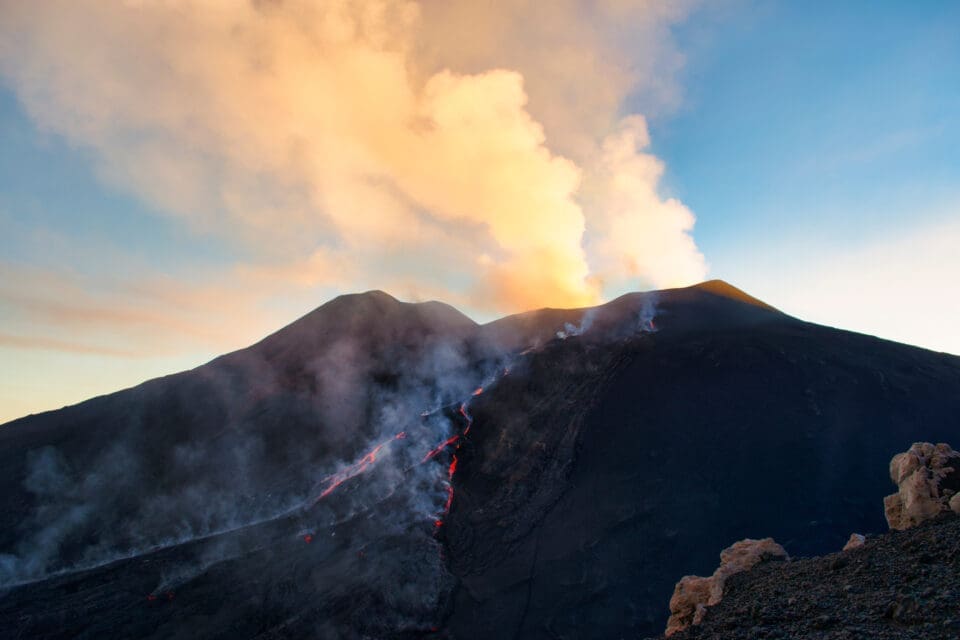
Editorial verification note: Operational information in this alert was checked against airport sources and Reuters reporting available on August 13, 2026. Because volcanic activity and aviation restrictions can change after publication, this page should be treated as a timestamped travel alert rather than a guarantee of future airport operations. The featured image in this post is an archival stock image of Mount Etna from Adobe Stock and does not depict the current eruption.


